On the right side of the channel marker was a sailboat with a teal bottom leaning on its mside, clearly run aground for more than a year or two. We were sailing towards it, main, mizzen, and staysail. I watched the water grow turquoise, the bottom clear as if only a few inches deep. “Can we tack?” I asked, feeling the anxiety of joining the teal bottomed boat tighten in my chest. 10 seconds later we tacked away, Jimmy bringing the helm to port, me moving and tightening lines as fast as I could.
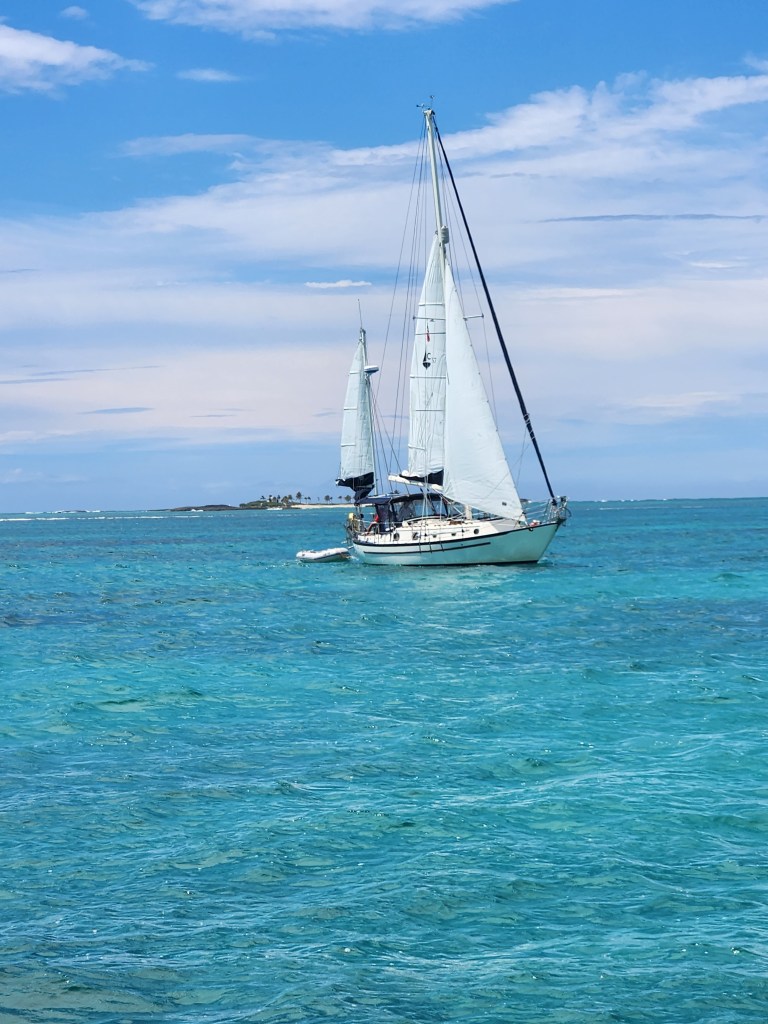
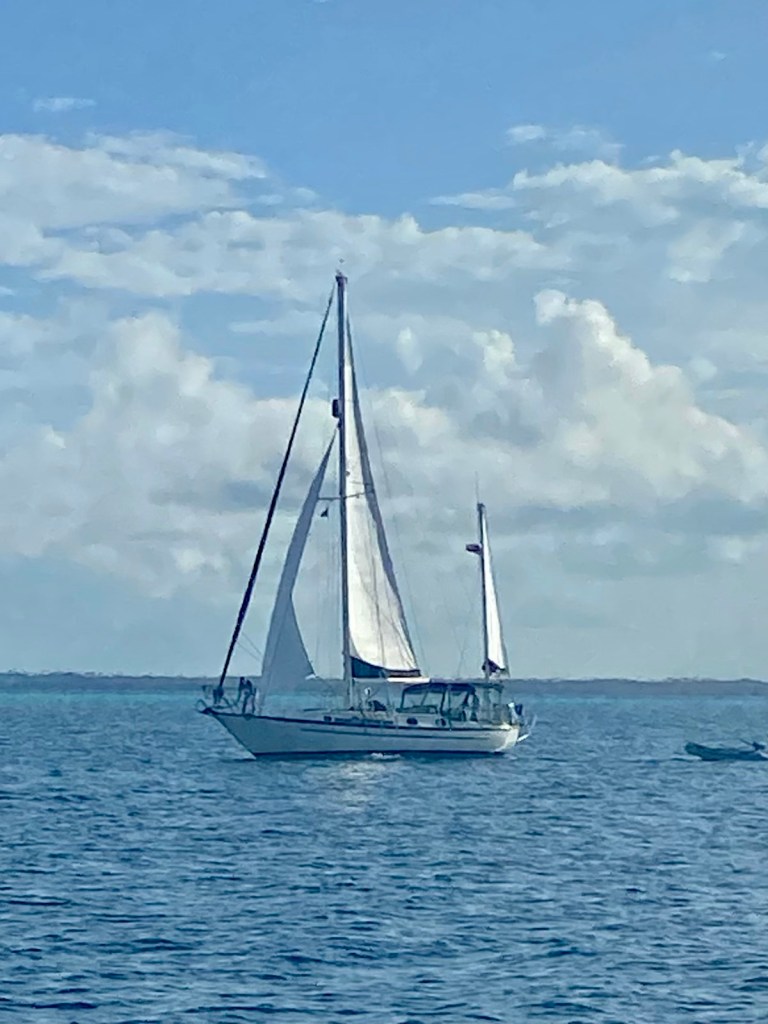
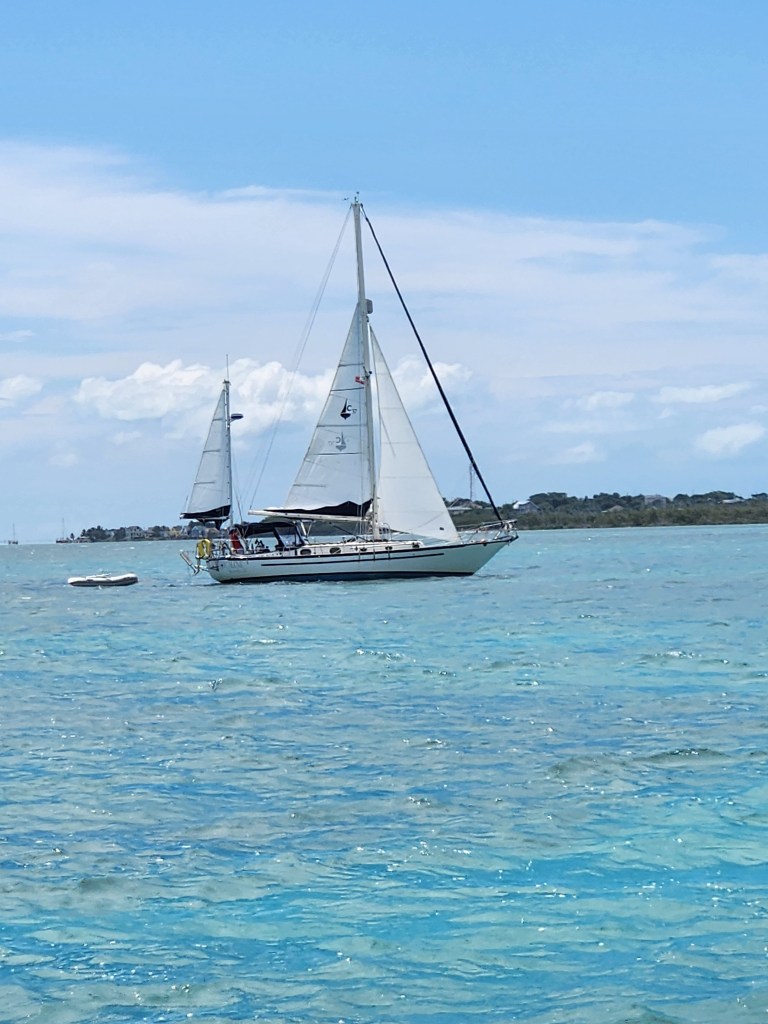
It was the first of many tacks to sail into Marsh Harbor, the largest city in the Abaco Islands. And yes, we did have to sail, as our engine refused to start, making a sound as if choked for fuel. We tacked right before a 45-foot catamaran, and then towards another 40-foot catamaran, between a 41-foot Beneteau, and a large looking ketch. We avoided a floating milk jug apparently marking a sunken car – remnants of Hurricane Dorian damage in 2019 – turned up into the wind, and finally dropped anchor.
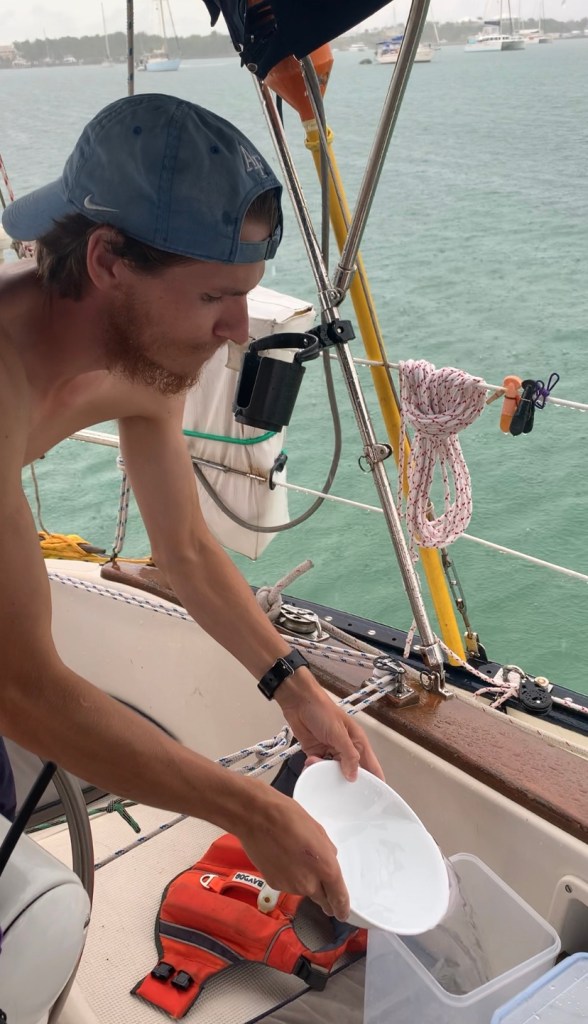
When it rained that afternoon, we danced in the cockpit, collecting water off the canvas, celebrating our success at making it to the harbor without an engine.
We had been having engine problems for nearly 14 days. As we made our way from Great Harbor Cay in the Berry Islands, across the North East Channel to the Abacos, we hit some heavy weather and large swells, forcing us to sail to a cove on the south point of the island. All that beating must have dislodged some debris or algae in our fuel tank, or rubbed a small hole in an oil line on top of our fuel filter. The engine did start and we arrived safe to our anchorage where we rested a few days.
But we wanted to move north to the more populated and popular cruising grounds of the Abacos, our first stop to be Little Harbor and Lynyard Cay. As we sailed along at 3kts in very light wind, we decided to put the engine on for an extra boost. She started up, but gurgled to a stop after only 5 minutes. We ran multiple checks while underway: oil level, good; bleed the engine; check connections, no sign of a fuel leak; change the secondary fuel filter. But she refused to start up again.
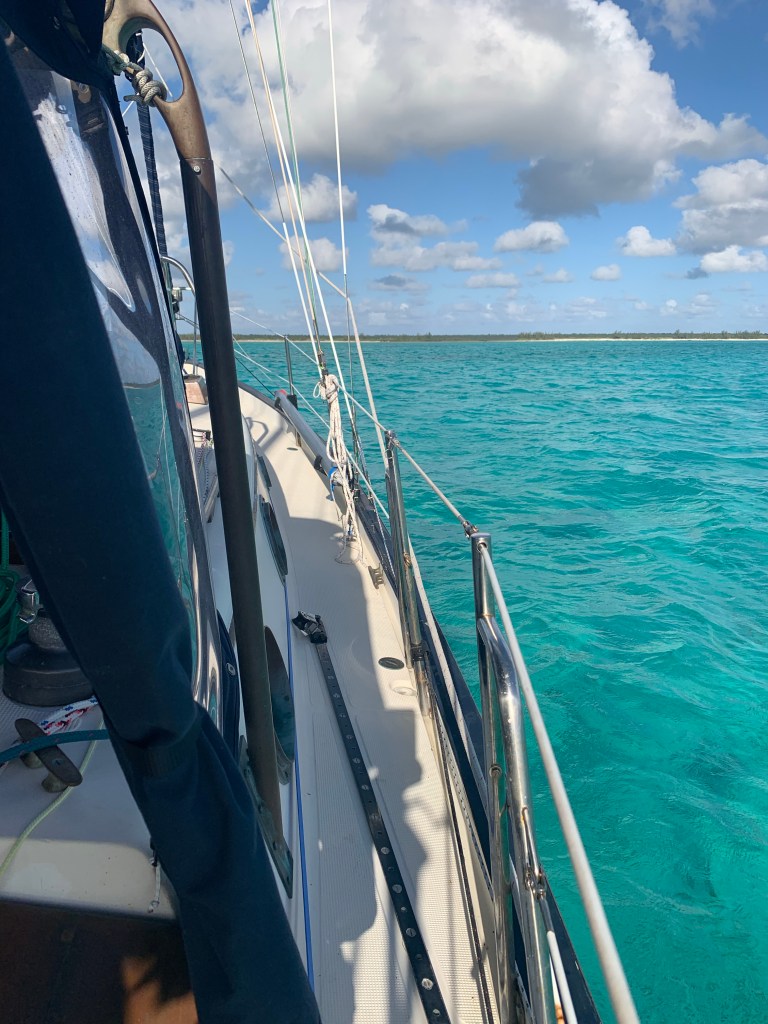
Slowly we came to the realization we would have to sail through the inlet with a reef on one side and rocks on the other, breaking waves appeared to be all around. It was nerve wracking although Jimmy had a cool cucumber exterior.
It became clear within 48hrs that the engine issue would require some parts which we could only purchase in Marsh Harbor. So we began to slowly sail north, stopping at Cays in between. After all, there was a time when everyone sailed without an engine; Linn and Larry Pardy circumnavigated in a small boat without an engine; so why couldn’t we (The Pardys also coined the phrase, “Go small, go simple, but go now,” and were one of many inspirations who convinced us to buy Jolene. Read more about the Pardys and their sailing career here).
We had to sail on and off anchor, and only travel when the wind was in our favor. There were plenty of frustrations to this – like getting stuck in a windless pocket outside a main channel, doing circles while fishing boats returned from their day charters. Jimmy would try to get the engine running but then the oil filter popped off and we had a whole new problem of oil in the bilge (don’t worry Jimmy cleaned it all in Marsh Harbor after we purchased many more oil soling pads).
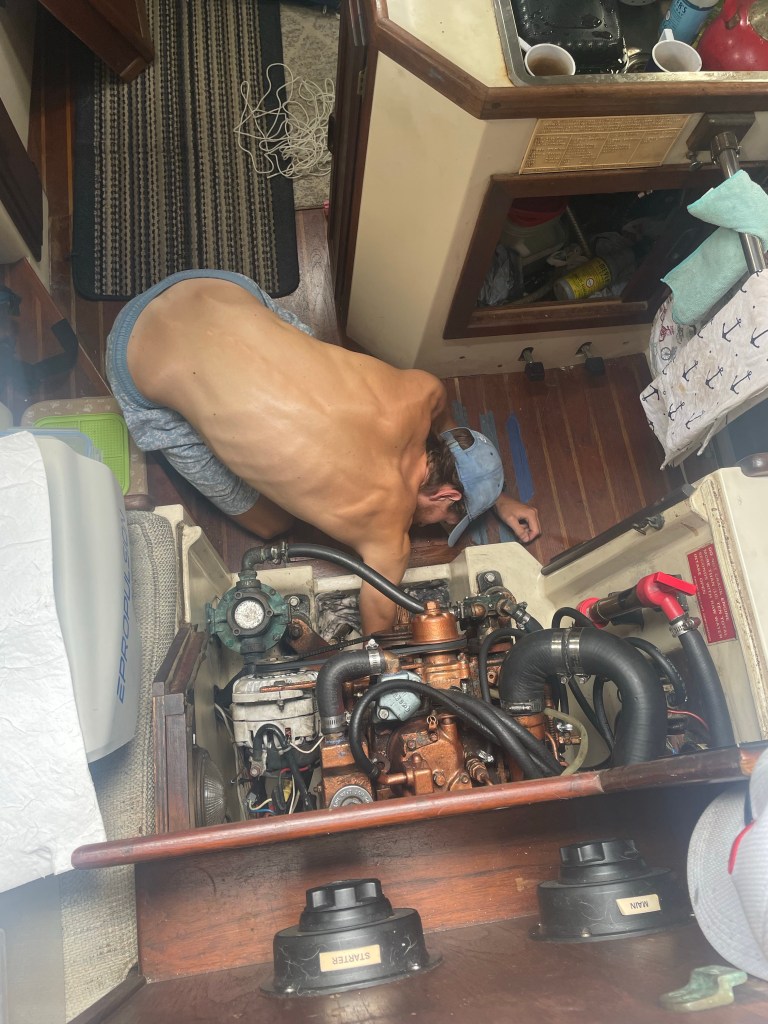
Sailing everywhere, though, taught us an important part of seamanship. It forced us to hone our sailing skills, and reinforced the idea to never be in too much of a rush. Most importantly, it made us comfortable to sail when our engine might fail. We are sailors after all – Jimmy has even been called a “purist” by some. It also forced us to take extra care in our planning and to have multiple plans in place:
◦ plan A, the engine runs and we anchor at high tide
◦ plan B, the engine runs and it too shallow so we anchor outside the harbor
◦ plan C, the engine fails so we anchor outside the harbor
◦ plan D,, the engine fails and we have to sail in OR anchor outside the harbor
◦ plan D.1, determining our sail plan for sailing to anchor
Jimmy will be the first to tell you I’m and planner, so I love discussing our options. It also prepares us for an emergency should one arise.
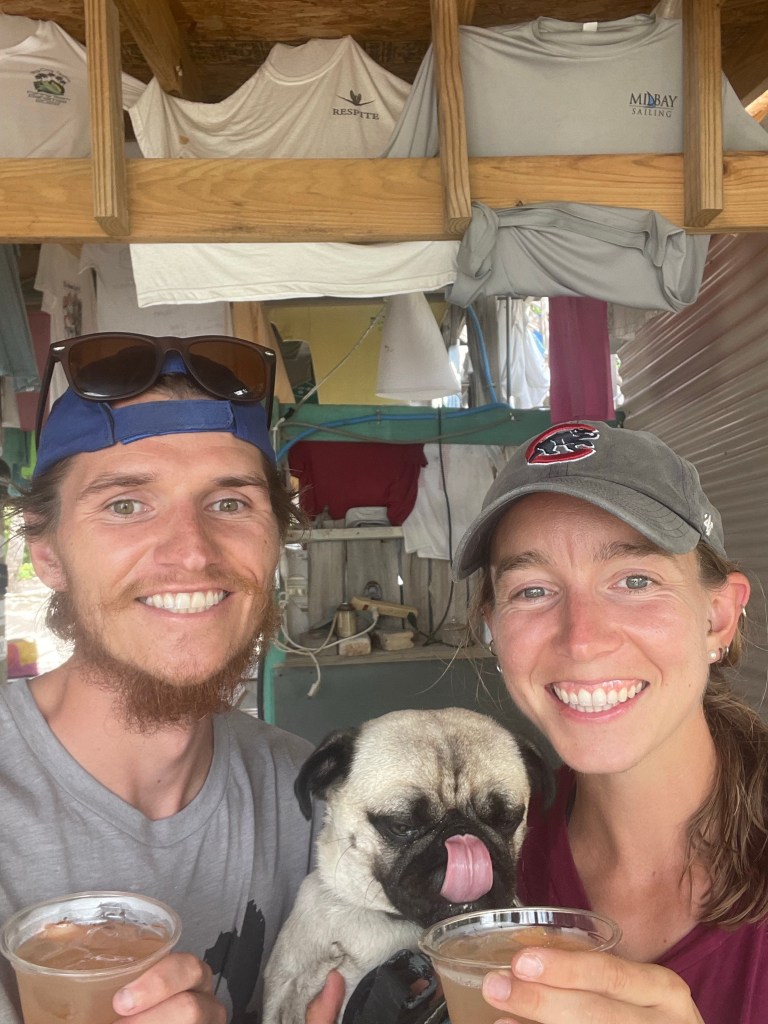
So what’s our engine status now? We changed some fuel lines, moved an oil line, and changed the primary Racor fuel filter. The engine ran 3hrs as we exited the Bahamas through Nunjack Channel. But now, after a long beat in big swells across the Gulf Stream we are sitting in Charleston Harbor and she refuses to spit water, an indicator there is a block in the raw water cooling system. Running the engine means risking overheating it.
Looks like for the time being, we are still sailing everywhere. Looks like we will continue to practice sailing in all conditions. Looks like we are living sailing life – boat projects in exotic places or slowing down to life at 5kts. I don’t know about you, but we pick the latter.
 The Sailing Shipleys
Leave a comment