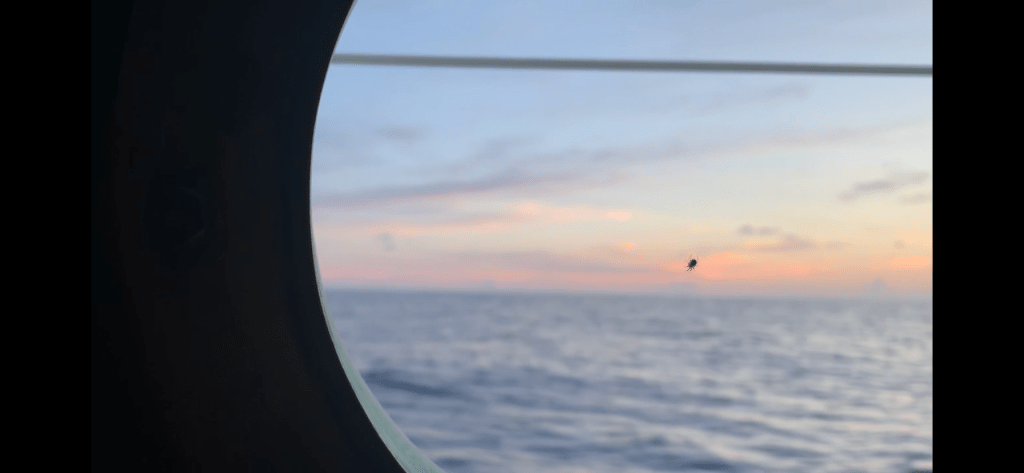
At the end of our post Boat Delivery Part 1: Jacksonville to Fort Myers, we had left Kismet on a mooring ball at Ft. Myers City Yacht Basin. Now, over 4th of July weekend we had to finish the final leg. The end was in sight – a quick 350 NM hop from Ft. Myers to Destin would be easy, so we thought. We loaded our one-way rental car, and trekked the 8.5 hrs to Ft. Myers, unloaded the rental into the dinghy (yes, this time we remembered to pack our foot pump), and motored to the boat. Our battery monitor displayed no charge and the lights would not turn on, but that was a problem for the next day.
We had planned to finish up some projects before waiting through the evening until 1-minute after midnight. It was a Friday and like any good superstitious sailor, Jimmy refused to leave on a Friday – that would only bring bad luck. But Poseidon had other plans for us. When we woke up, we were dismayed to find that we had somehow run our batteries to zero charge, despite our solar panels. We were still learning the systems on the boat, and in hindsight, think we should have turned the inverter, and AC powered battery chargers, off. Rookie mistake and we were kicking ourselves. Needless to say, our Friday was off to a rough start. After taking Moses for a walk on land here’s how the rest of our day went:
0730 – started boat projects. replace engine head cover gasket, install new electric bilge pump, rebuild manual bilge pump, troubleshoot solar, troubleshoot fridge.
1200 – successfully installed electric bilge pump. no luck on solar even after checking the connections. called TowBoat U.S. for a jump. Jimmy gets gasket replaced even though it’s for a Universal 5432, when ours is a 5424. Close enough.
1400 – Tory dinghies to shore and gets stopped by state marine troopers because our dinghy isn’t registered and we are using an electric trolling motor (usually we just row, but the mooring was way out there). Tory returns the rental car. TowBoat U.S. arrives.
1600 – TowBoat U.S. Captain figures out the reason we couldn’t jump the batteries was because he didn’t have the correct switches on. we get powered up and decide to depart on a Friday – we didn’t want to turn the engine off!
~2130 – we make it out to the Atlantic and begin sailing (with the motor still on)
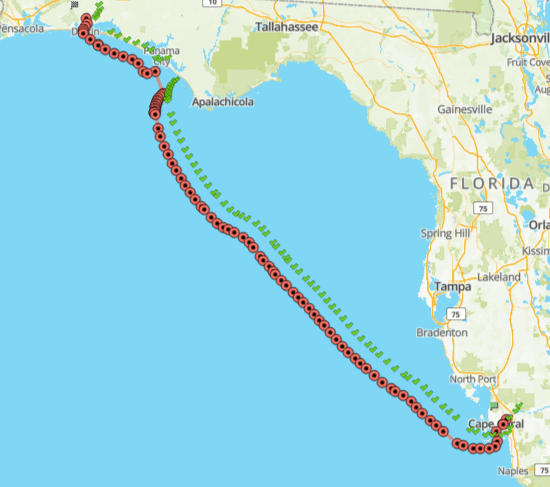
The journey through the Caloosahatchee River was uneventful, although nerve racking as the sun began to set and we had to spot the flashing – or not flashing – channel markers. Jimmy navigated us out of the inlet and we were thrilled to put the sails up. We could not wait to sail, even if we had to keep the motor on to charge the batteries
Like any boat delivery, the weather did not cooperate. Instead of having to avoid storms, we has nearly 3 full days of 0-5 knot winds. For a boat our size and weight, that meant flogging sails and constant motoring. Not a problem for us, because we could guarantee traveling at 5 knots without having to beat to the wind as we did around Cape Canaveral. Plus, the calm nearly flat sea state meant that Jimmy and Moses hardly got seasick.
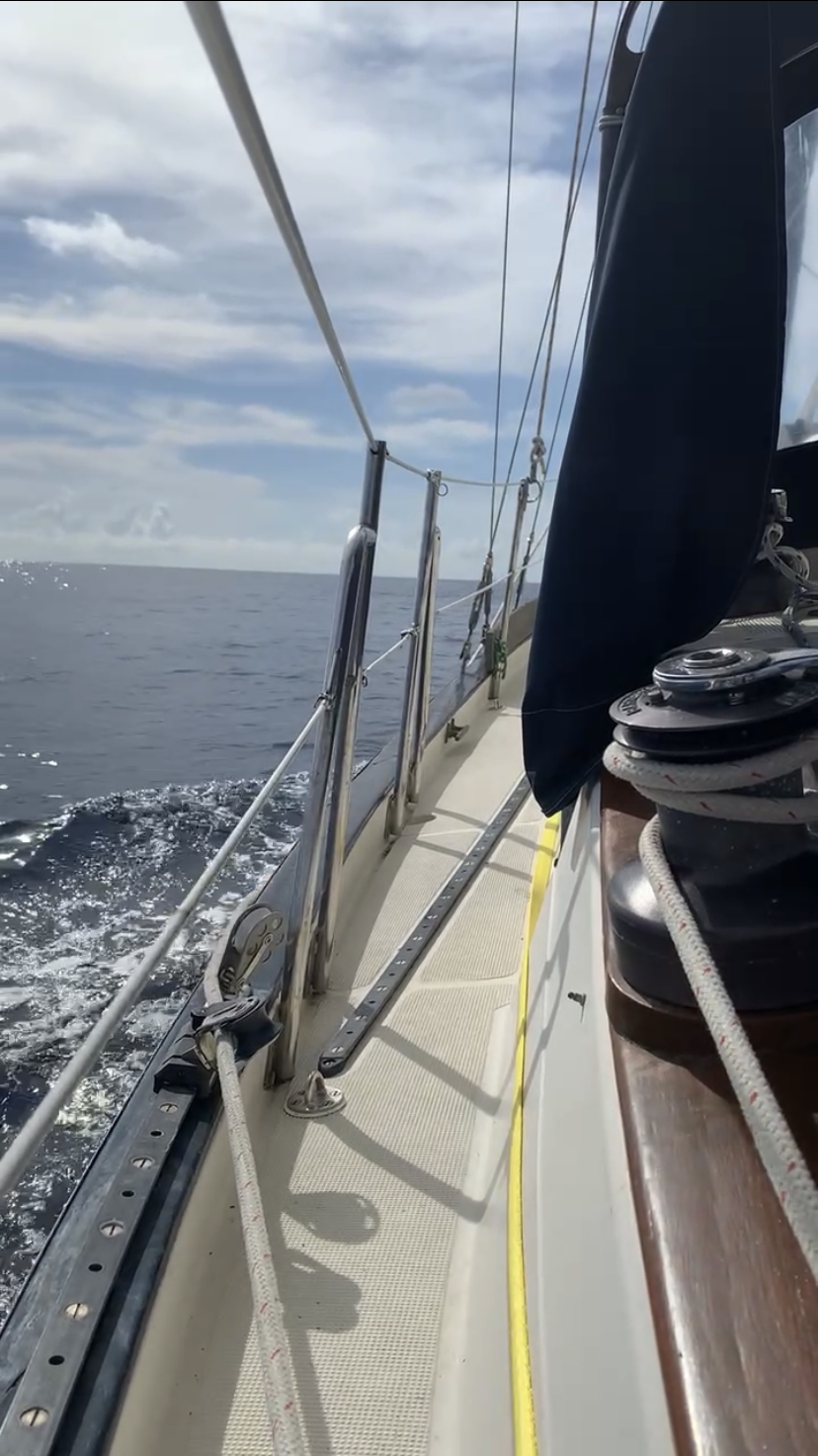
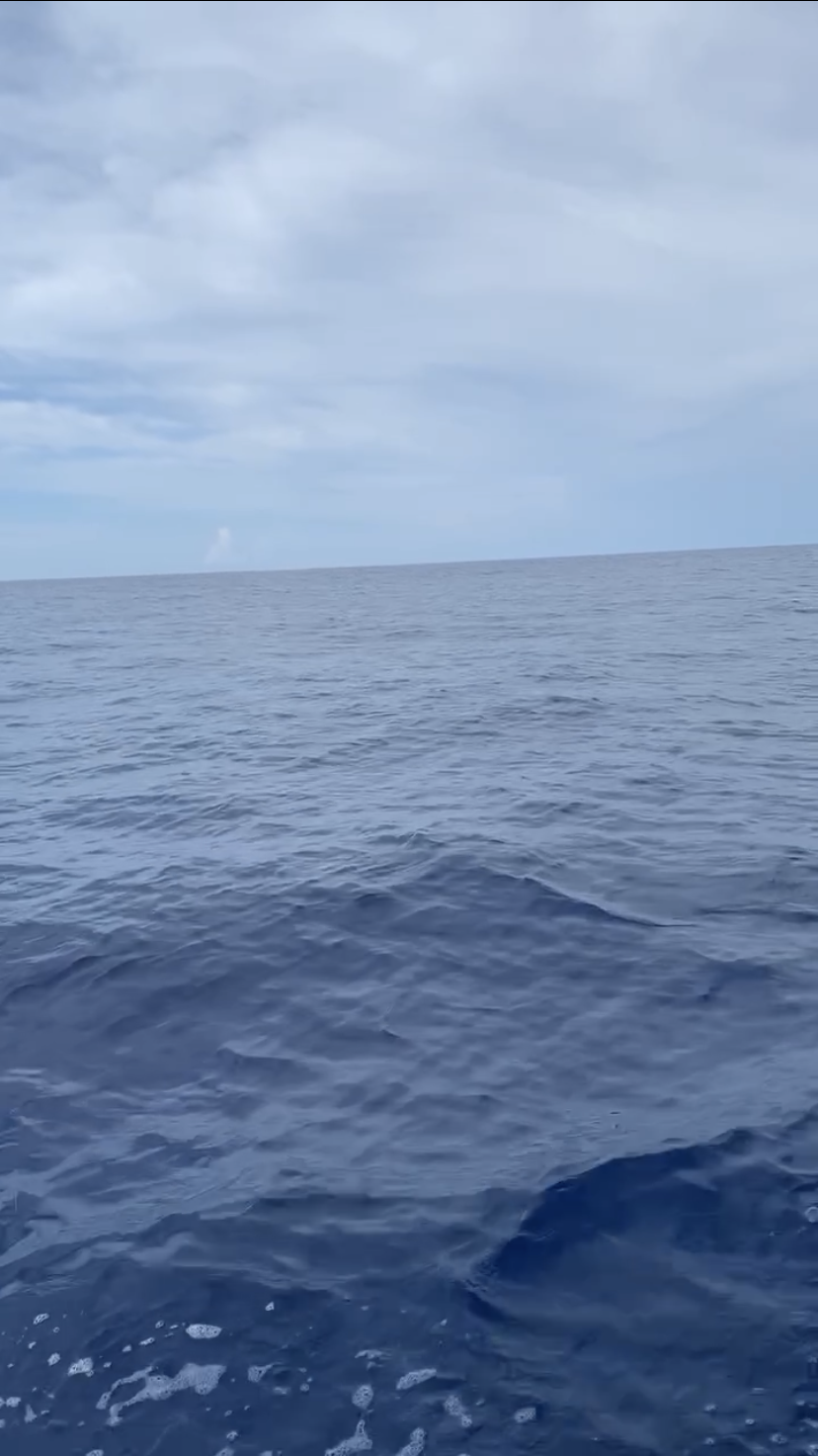
As we approached Panama City Beach, FL, we became concerned about our fuel consumption. We estimated that our burn rate was 0.73 gallons / hour, and our 40-gallon tank should be able to get us to Panama City with 3 gallons to spare. The previous owners had told us the last quarter of the tank goes quickly due to the fuel tank being shaped to fit the hull, but it was going at more than double the rate of the first half of the tank.
Jimmy and I looked at each other and hoped our calculations had been correct. Just in that moment around 9:40 am, the engine sputtered, slowed, started back up again, and then died completely. We were 30 NM south of Panama City Beach, out of diesel, and sitting in zero wind. I guess that leaving Friday had finally caught up with us.
So, what do you do when you are a sailboat without wind or a working engine in the middle of the Gulf of Mexico? First, you literally bob up and down, doing circles and going nowhere fast. Then, you take out every type of sail combination you can think of to get some movement: genoa and mizzen (or jib and jigger as some call it), genoa and main, just main, just mizzen, the spinnaker and main, the spinnaker alone, even the spinnaker rigged as a close reaching sail. All our efforts resulted in was us being extra hot, sweaty, and heading south away from land.
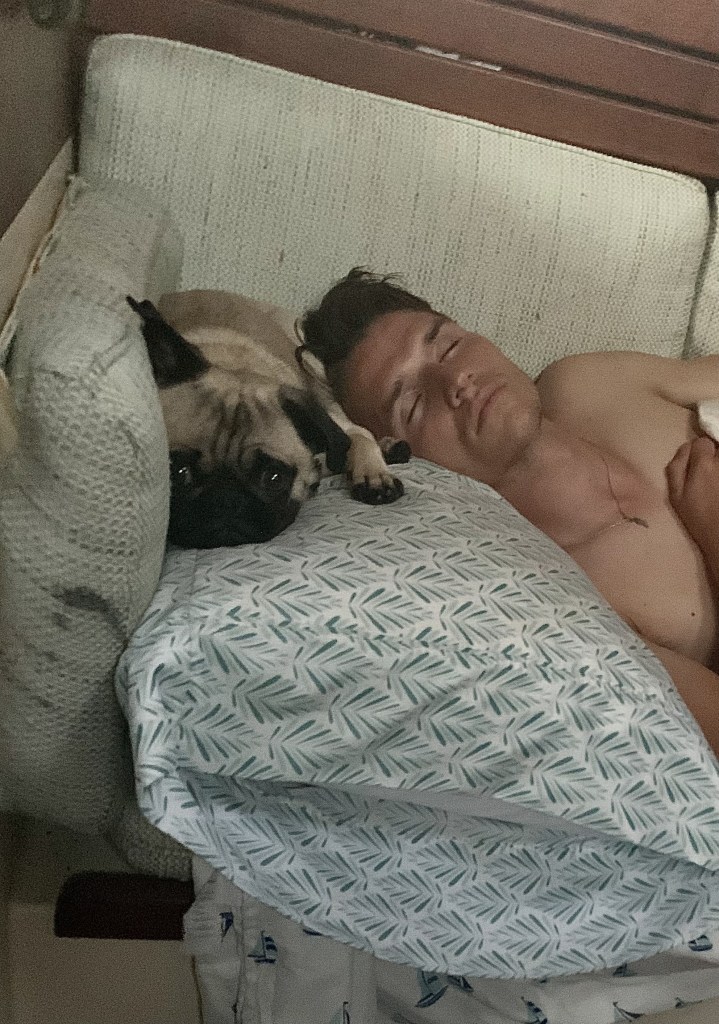

Jimmy sat demoralized in the cockpit, “How could we have been so foolish to not take more fuel? Now my wife and dog are sitting stranded in the middle of the Gulf and I can’t do anything to help.” I was feeling exactly the same way, asking why we didn’t bring just two more jerry cans with us (we had 4x 5 gallon cans on board and had used them already). We simply had to sit and wait for the wind.
With a bit of luck, some offshore fishermen came close enough for us to hail them down. They tried to call TowBoat U.S. on Satellite phone, but it would not connect, so they flagged down another fishing crew who agreed to head back in shore, call TowBoat U.S., and come back with an update. An hour later, the fishing boat was back and TowBoat would be with us in 2 hrs. As all things in boat deliveries, this did not go to plan.
As we drifted and waited for the tow, a squall passed through and we brought out a small bit of sail area to get back in the vicinity of the GPS coordinates the fishing boat had passed. What we should have done was sail our hearts out – we learned that you have to keep problem solving and trying to help yourself at sea because you cannot always rely on other people.
Sure enough, the tow never arrived, but the original fishing boat did drive by again at about 3:30 pm. They offered to take one of us ashore with the jerry cans. As the fishing captain revved up the two 250 hp engines, I tried to push away my fears about finding Jimmy, Moses and the boat in the Gulf. We decided Jimmy would keep trying to move forward while also updating our GPS tracker every 20-30 minutes.
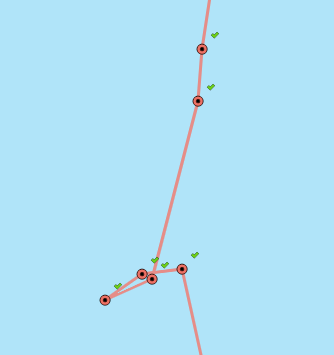
At 7 pm, after checking Jimmy’s GPS location and the TowBoat captain spotting a sailing vessel on the horizon (note: most all sailboats have white sails…). The wind had filled in from the northwest and Jimmy had Kismet moving at 4.5 knots! I was so relieved could have cried. Once we fueled up with the TowBoat jerry cans and our own, we went on our way, cruising at nearly 6 knots with full sails and a working engine.
We had solved the fuel issue, but were at the next inflection point in the journey: To go via Panama City, or to take our chances at the Destin East Pass? Although Panama City was a wider, deeper inlet, we decided to follow our “no ports at night” rule and head for Destin. The East Pass is notorious for moving shoals and very shallow spots, not to mention having a vertical clearance of 48 ft despite it being listed (and the height board reading) 49 ft.
By what must have been the same miracle that brought us the fishing boat, we avoided running aground in Destin pass, and made it under the bridge with inches (yes, inches) to spare. Our VHF antenna was bent all the way back, and somehow we did not lose it.
The Choctawhatchee Bay was our sailing grounds and it was unbelievable to be back. The sail into Destin had been exciting, like rounding the corner into the last mile of a marathon, especially since during my watch I finished Robin Lee Graham’s Dove. Although we had only traveled 3.5 days whereas Robin spent 5-years circumnavigating, I could identify with his sentiment of making it home. On reflecting about his journey, Robin says, “I learned so many things at sea – like kindness has nothing to do with money and happiness has got nothing to do with rank or race.” I hope we can continue to learn and experience the many kindnesses the world has to offer. For now, we will sail and refit Kismet as we try to make world travel a reality.
 The Sailing Shipleys
Leave a comment